
Sustainable Aviation Fuel 101
What is SAF?
Sustainable Aviation Fuel (SAF) is jet fuel made from renewable sources instead of petroleum. It is a drop-in replacement for conventional JetA, meaning it works in existing aircraft engines and infrastructure without modifications. SAF meets the same ASTM safety and performance standards as fossil-based jet fuel.
Chemically, SAF contains the same hydrocarbons as conventional kerosene, so tailpipe emissions are similar. The difference lies in where the carbon comes from: SAF uses recycled or renewable carbon rather than extracting new carbon from the ground. This results in a net reduction in lifecycle carbon emissions—up to 90% for neat SAF and typically 20–25% for blended fuel, depending on the feedstock and blend ratio.
How does SAF reduce emissions?
The climate benefit of SAF is reported through a Lifecycle Analysis (LCA)—a method that measures carbon emissions from production through combustion. While SAF doesn’t significantly change CO₂ tailpipe emissions, its lifecycle emissions are much lower because the carbon originates from renewable sources rather than fossil reserves.
Normally, carbon buried permanently underground in the form of oil is extracted and, through the burning of jet fuel, is emitted as carbon dioxide (CO2) in the atmosphere. For SAF, carbon is in various ways sourced from carbon already in the atmosphere and then simply remitted when SAF is burned, recycling carbon in the atmosphere rather than adding new carbon to it.
Additional benefits include lower sulfur oxides (SOx), particulate matter (PM), and aromatic compounds, which can reduce contrail formation and improve local air quality near airports.
Why does aviation need SAF?
Aviation accounts for roughly 9–12% of U.S. transportation emissions, and over 90% of aviation’s impact comes from burning jet fuel. Air traffic is projected to nearly double by 2044, making decarbonization critical. While efficiency improvements and new technologies help, most aircraft flying today will still be in service by 2050. SAF is the most effective near-term solution to reduce aviation’s carbon footprint across the existing and expected in-service fleet.
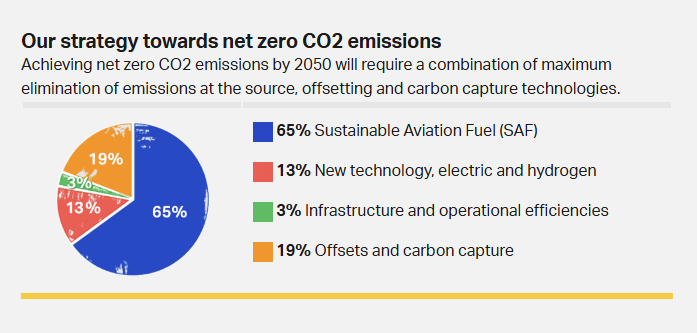
Globally, the International Air Transport Association (IATA) estimates SAF could deliver about 65% of the emissions reductions needed for aviation to reach net-zero by 2050:
What’s the status of SAF supply?
SAF production is still scaling up. It is capital-intensive and lacks the economies of scale of traditional oil refining, which creates a “green premium”—the price gap between SAF and conventional Jet A. Closing this gap is essential for widespread adoption.
Since 2019, SAF volumes have grown exponentially. Today, SAF accounts for almost 1% of total jet fuel—100 times more than just four years ago. While this is still a small share, the growth trajectory is encouraging. Find more SAF supply statistics here.
Policy is one of the key drivers for cost reduction and supply growth. In the U.S., tax credits support research, development and production. These programs primarily support producers, but some benefits extend to operators who adopt SAF. In Europe and the UK, supply is stimulated through mandated targets, such as the ReFuelEU Aviation SAF mandate.
Active engagement from business aviation is critical to ensure these policies reflect operational realities and support global decarbonization goals.
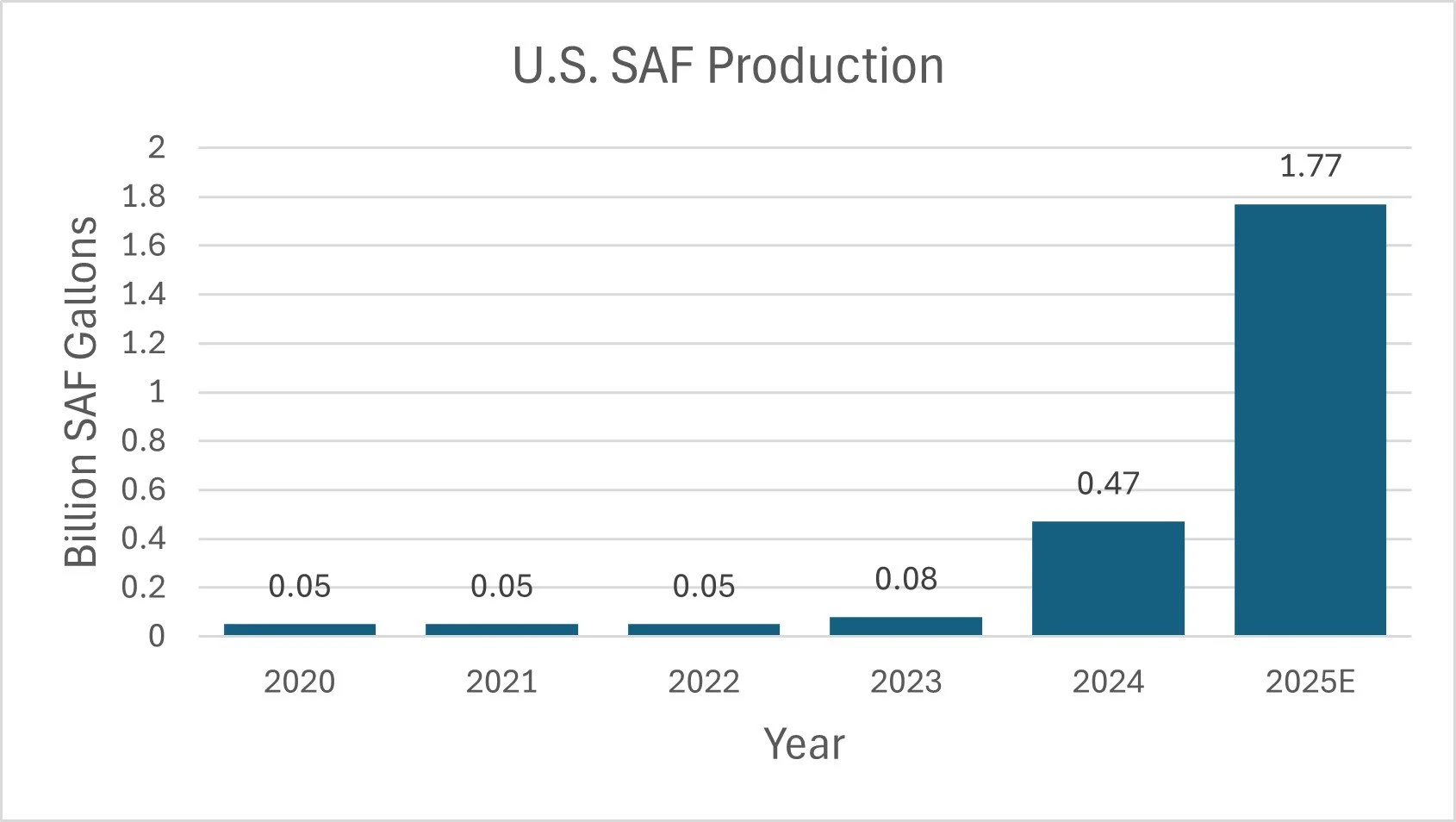
Image: 4AIR graph depicting exponential growth in U.S. SAF production. Sources: IATA, BCG, RMI, GreenAir News, Aaron Robinson
What is SAF made from?
SAF can be produced from several types of renewable sources, grouped into three broad categories:
Biomass-to-Liquid (biofuels)
Waste-to-Liquid
Power-to-Liquid (e-fuels)
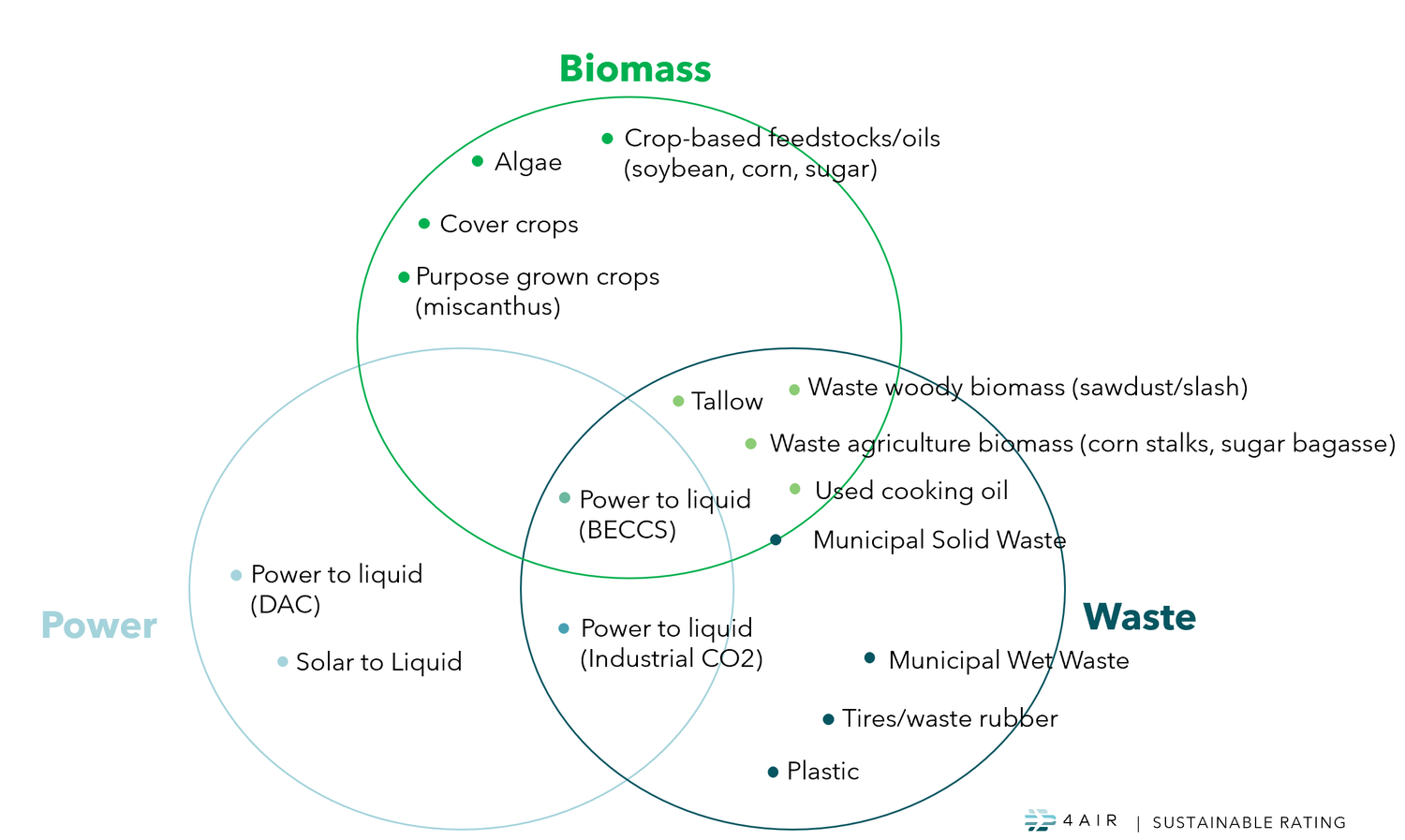
Image: 4AIR diagram depicting SAF feedstock categories.
Today, most commercial SAF comes from biomass and waste categories—specifically waste oils and fats—via the HEFA conversion pathway (Hydroprocessed Esters and Fatty Acids). This method is proven but limited by feedstock availability, making feedstock diversification essential.
Other feedstocks are still in various stages of commercial deployment, but near-term capacity expansion is expected from crop-based feedstocks and other biomass sources. Municipal waste feedstocks represent promising supply opportunities but remain challenging to utilize; however, power-to-liquid technologies could enable large-scale production with better economies of scale.
Is SAF safe?
All SAF must be certified under ASTM-approved pathways to ensure safety and performance standards. Each potential feedstock and conversion pathway has been specifically reviewed and unanimously approved by an ASTM committee of fuel suppliers and engine and airplane manufacturers, with set upper limits setting blend limits.
SAF is safe and fully compatible with existing jet engines and fuel infrastructure—no modifications required. Once blended with conventional jet fuel, it is certified under ASTM D1655 or DEFSTAN 91-91, the same standards as Jet A/A-1. At that point, SAF is chemically identical to conventional fuel and completely fungible.
SAF can be blended at different levels with limits between 10% and 50%, depending on the production pathway. Most commercially available fuel is around 30% SAF and 70% Jet A.
Why is SAF blended with Jet A?
SAF is blended because some production pathways lack aromatic compounds found in conventional jet fuel. Aromatics are critical for swelling O-rings in aircraft fuel systems, which prevents leaks. Current ASTM standards ensure enough aromatics remain by limiting blends to 50% SAF.
Research and testing are underway to certify some pathways for 100% neat SAF use in aircraft engines, which would eliminate the need for blending in the future and potentially improve SAF costs.
How can operators access SAF?
SAF is available for direct uplift by business aircraft and private operators at more than 100 airports worldwide.
For locations without physical SAF supply, operators can use book and claim, an accounting system that separates the physical fuel from its emissions reduction attribute. This approach makes SAF more accessible and cost-effective by allowing operators to claim the environmental benefit even if the fuel is used elsewhere.
To ensure transparency and credibility, SAF registries track book and claim transactions across the supply chain. These systems provide robust accounting so operators can confidently report emissions reductions.
Ready to take the next step? 4AIR can help. Check out our resources:
4AIR can help you navigate SAF adoption with tools and resources designed for operators:
Assure SAF Registry: Our digital platform for SAF inventory management and emissions tracking.
SAF Map: Identify airports where business aviation operators can uplift SAF directly.
Learning Center: Explore educational resources, calculators, and whitepapers to deepen your understanding of SAF.
Still have questions or want a walkthrough of the Assure SAF Registry? Contact us, and a sustainability expert will be in touch shortly.